Local Warehousing and the Making of Same-Day Delivery
What has to be true for a same-day promise to be kept? That is the question worth asking before you trust any delivery estimate, and the answer rarely has anything to do with the courier’s speed alone. A rider can only move as fast as the stock allows. If the device you ordered is sitting in a warehouse three time zones away, no amount of rider hustle will put it in your hands before the day ends. The real engine behind Lana vape same day delivery is not the motorbike. It is the warehouse, the shelf, and the decision about where to hold inventory before anyone clicks order. This article looks at that machinery in plain terms, from the perspective of a buyer who wants to know why the promise holds up.
Same-day delivery gets marketed as a service feature. In practice, it is a logistics outcome. It is the visible tip of a supply chain that has already done most of its work hours or days earlier. Understanding the four elements below — warehouse location, stock positioning, pick-and-pack flow, and courier handoff — tells you whether a same-day claim is credible or just a slogan.
Warehouse Location: The Geography Behind the Clock
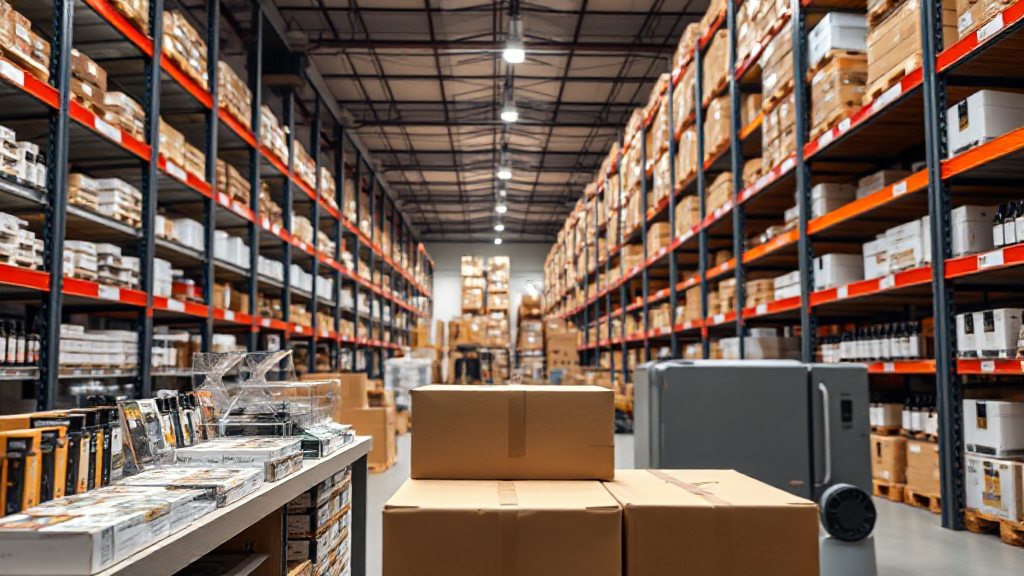
Every same-day promise is a geography problem disguised as a service promise. A warehouse placed near the customers it serves compresses the distance a parcel must travel after it is picked. A warehouse placed far away does the opposite, and no amount of courier urgency can recover the lost hours. This is why local stock matters more than almost any other variable in the equation.
In a dense city-state like Singapore, the geography is unusually favorable. Distances are short, road networks are mature, and a rider can cross from one end of the island to another in well under an hour outside peak traffic. But short distances only help if the stock is already inside that short radius. A warehouse in a distant hub, however efficient, turns a thirty-minute delivery into a next-day or two-day affair. The location decision is therefore the first and most consequential one.
There is a second layer to location: the specific site. Industrial estates, logistics parks, and mixed-use buildings all have different access characteristics. A site with poor loading access, limited parking, or restricted operating hours slows the pick-and-pack and handoff stages even when the physical distance is small. The best same-day operations choose sites that are close to customers and easy to move parcels out of quickly. That combination is rarer than it sounds, and it is one reason some retailers can promise same-day while others quietly cannot.
When you see a claim like lana vape sg, the useful question is not whether the courier is fast. It is whether the seller actually holds stock within the delivery zone. If they do, the geography works in your favor. If they do not, the promise is aspirational.
Stock Positioning: Deciding What Sits Where, and Why
Warehouse location is only half the story. The other half is stock positioning: the deliberate decision about which products sit in which quantities at which location. A warehouse near customers is useless if it holds the wrong inventory. Same-day delivery depends on the seller having already anticipated demand and placed the right units close to the buyer.
This is where most same-day promises break down. A retailer might have a large catalog and a central warehouse, but if a specific device or pod is out of stock locally, the order becomes a special order. Special orders take days, not hours. The customer sees a same-day badge on the website and then waits a week for a restock. The gap between the promise and the reality is almost always a stock positioning failure, not a courier failure.
Good stock positioning involves several judgment calls. Which models move fastest? Which flavors or variants sell out first? How much buffer stock is enough to absorb a spike without tying up too much capital? How often should the local shelf be replenished from a larger regional supply? These are not glamorous questions, but they determine whether a same-day order is routine or a gamble.
For a buyer, the practical takeaway is simple. A seller who keeps ready local stock can make same-day delivery a normal outcome. A seller who dropships from overseas cannot, no matter how attractive the website looks. The presence of real local inventory is the clearest signal that a Singapore vape delivery promise is grounded in something physical rather than marketing copy.
There is also a quality dimension. Stock that sits in a local warehouse is easier to inspect, count, and verify than stock that arrives in a single drop from an overseas supplier. Local positioning supports authenticity checks and reduces the risk of receiving a product that has been mishandled in transit. That matters to buyers who care about what they are actually getting.
Pick-and-Pack Flow: The Minutes Between Order and Handoff
Once the stock is in the right place, the next constraint is time: how quickly an order can be converted from a digital line item into a sealed parcel ready for a rider. This is the pick-and-pack flow, and it is where many operations lose the hours they saved on geography and positioning. Singapore lana vape
Picking is the act of locating the specific item in the warehouse. In a well-organized operation, items are stored by a logical system — by SKU, by velocity, by category — so a picker can find them without searching. In a poorly organized operation, picking is a hunt, and hunts take time. Packing is the act of securing the item, adding any required materials, and preparing it for transport. Done well, it is quick and standardized. Done poorly, it is a bottleneck.
Discreet packaging is a specific part of this flow that matters to many buyers. A parcel that is obviously identifiable from the outside creates privacy concerns. A well-run operation uses plain outer packaging, minimal external labeling, and a consistent process so that every order leaves the warehouse looking the same. This is not a marketing flourish; it is a packing-standard decision that has to be built into the workflow from the start.
Speed in pick-and-pack comes from repetition and standardization, not from rushing. The operation that processes hundreds of similar orders a day develops a rhythm that a low-volume operation cannot match. That rhythm is invisible to the customer, but it is the difference between an order that ships in twenty minutes and one that ships in two hours.
For buyers, the implication is that same-day delivery is a throughput problem as much as a distance problem. A seller who handles volume can absorb your order without breaking the flow. A seller who handles a handful of orders a week may still deliver same-day, but the margin for error is thinner.
Courier Handoff: The Last Mile and Its Limits
The courier handoff is the most visible part of same-day delivery, which is why it gets the most attention. It is also the part with the least room for recovery. By the time a parcel reaches a rider, the earlier stages have already determined whether same-day is possible. The rider can only execute; they cannot create time that the warehouse did not save.
The handoff itself has its own requirements. Someone has to be available to pass the parcel to the rider. The rider has to have a clear route. The delivery address has to be reachable and accessible. In a dense city, these are usually manageable, but they are not automatic. Peak-hour traffic, building access rules, and recipient availability all affect the last mile.
This is why mature same-day operations build in buffer. They do not promise delivery at the exact minute the rider could theoretically arrive; they promise a window that accounts for real-world friction. They also tend to use riders who know the local geography, because a rider who has to consult a map at every turn is slower than one who knows the roads.
The handoff is also where trust is confirmed or broken. A parcel that arrives on time, sealed, and undamaged validates the entire chain behind it. A parcel that arrives late or compromised raises questions about every stage. For the buyer, the handoff is the moment when the logistics either pay off or do not.
It is worth noting that the courier stage is where a Vape delivery sg service either earns its reputation or loses it. The earlier stages are invisible, but the handoff is experienced directly. That asymmetry is why operations that care about repeat business invest heavily in the stages customers never see.
Why This Matters to the Buyer
All of this machinery exists for one reason: to make a promise you can rely on. When you order from a seller with real local warehousing, positioned stock, a disciplined pick-and-pack flow, and a reliable courier handoff, you are not gambling on a marketing claim. You are buying into a system that has already done the hard work before you clicked.
The practical benefits are straightforward. You get your order the same day, which matters when you need something now rather than eventually. You get discreet packaging, which matters for privacy. You get authentic products from inspected local stock, which matters for quality. And you get a delivery window that reflects reality rather than optimism. None of these are accidents; they are the downstream results of good logistics.
It also helps to know what to look for. A seller who talks about local stock, ready inventory, and same-day windows is describing a real capability. A seller who talks only about speed and low prices, without any mention of where the stock actually is, is describing a hope. The distinction is not subtle once you know the four elements to check: warehouse location, stock positioning, pick-and-pack flow, and courier handoff.
For buyers in Singapore, the local market makes same-day delivery genuinely achievable in a way it is not in many other places. The distances are short, the logistics infrastructure is strong, and a well-run local operation can move a parcel from shelf to doorstep in hours. When you see a Sg vape shop delivery option that actually holds stock locally, the promise is not a stretch. It is the natural output of a system built to deliver it.
The next time you see a same-day badge, ask the question from the top of this article: what has to be true for this promise to be kept? If the answer includes a local warehouse, positioned stock, a fast pick-and-pack flow, and a courier ready to move, then the promise is credible. If the answer is vague, the badge is decoration. The difference is not in the marketing. It is in the warehouse.