How to Spot Authentic MARBO 25000 Puffs When Buying Online in Singapore
You order a high-puff-count disposable online, wait for the courier, open the box, and take that first draw. Something feels off. The airflow is tight, the flavour tastes thin, and the battery seems to fade far sooner than the puff count on the box promised. That sinking feeling is familiar to a lot of buyers in Singapore, and it usually leads to one uncomfortable question: is this device actually genuine, or did I just pay premium money for a counterfeit? If you have been shopping for a lana pix or any other big-puff device, this guide walks through the verification habits that separate a confident purchase from a gamble.
Why Counterfeits Target High-Puff-Count Disposables
The economics of counterfeiting explain almost everything. A device advertised at 25,000 puffs commands a higher price than a basic 2,000-puff stick, which means a fake version of a premium product carries a much bigger profit margin for the people making it. They do not need to fool everyone. They only need to fool enough buyers who order quickly, trust a low price, and never check the packaging closely. Online channels make this easier. When you buy in a physical shop, you can pick the device up, feel the weight, turn the box over, and compare it against what you already know. Online, you are trusting a product photo, a listing description, and a seller you may never meet. That gap between the photo and the parcel is exactly where counterfeiters operate.
There is also a supply-chain reality that honest sellers deal with. Popular high-puff models sell out, restock in waves, and move through several hands before reaching a retail listing. A counterfeit does not need to infiltrate the whole chain. It only needs to enter at one weak point and then ride the reputation of the genuine product from there.
Verification Steps You Can Do Before You Pay
The best time to catch a fake is before money changes hands. Start with the seller, not the product. A legitimate retailer will describe what they sell in plain terms, list the specific brands and puff counts they stock, and explain how delivery works. Vague listings that promise “original” without naming the brand, the model, or the puff count are a warning sign.
Check whether the seller publishes real product names. A store that openly lists a marbo vape 25k alongside other recognised models is giving you something to verify against. If the listing hides the brand behind generic phrases, you have nothing to compare, and that is deliberate.
Next, look at the price. Counterfeiters compete on price because that is the only advantage they have. If a 25,000-puff device is being sold far below what every other seller charges, ask yourself what was cut to make that possible. Genuine stock has a real cost: manufacturing, shipping, storage, and the margin the seller needs to stay in business. A price that ignores all of that is not a bargain. It is a clue.
Finally, check whether the seller offers cash on delivery. This matters more than most buyers realise. A seller confident in their stock will let you pay when the parcel arrives, because they know the product will hold up to inspection. A seller who insists on full prepayment and disappears after the transfer is telling you something about how much they trust their own inventory. For buyers in Singapore, COD is one of the simplest risk-reduction tools available.
Packaging Tells That Separate Real From Fake
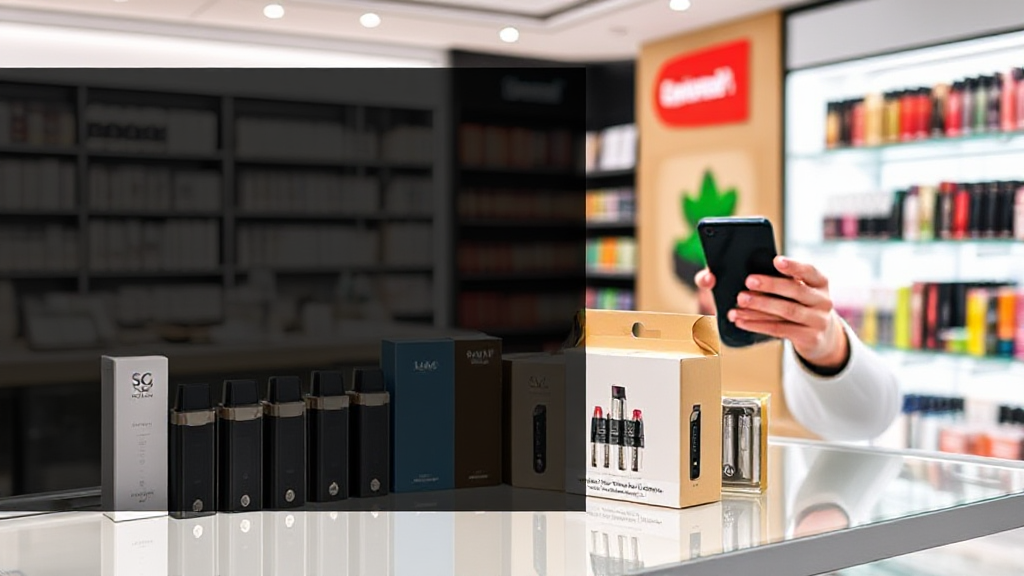
Once the parcel is in your hands, the packaging becomes your first line of evidence. Genuine manufacturers invest in print quality because their brand depends on it. Look closely at the following:
Print sharpness. Authentic boxes have crisp text, clean edges, and consistent colour. Counterfeit packaging often looks slightly blurry, with text that is a shade too bold, a shade too light, or misaligned against the border. Hold the box at an angle under light. Fakes tend to show rough printing where the genuine version is smooth.
Font and spelling consistency. Brand names are registered and reproduced exactly. If the model name on the box is spelled differently from the listing, or if the font changes between the front and the side panel, treat that as a serious warning. Counterfeiters frequently reproduce the logo but get the smaller text wrong.
Batch and serial information. Genuine high-puff devices usually carry a batch code, a serial number, or a QR code that can be checked. Scratched-off panels, missing codes, or codes that lead nowhere are red flags. If the seller cannot explain how to verify the code, that is information too.
Seal integrity. The device should arrive sealed as the manufacturer intended. A box that has been re-taped, opened, or resealed suggests the contents may have been swapped. This is especially common with resold or returned stock that has been repackaged and passed off as new.
Physical weight and finish. A genuine 25,000-puff device has a certain heft because of the battery and the e-liquid it holds. If the device feels unusually light, or if the casing has rough seams and loose fittings, the internals are probably not what the label claims. This is where a marbo 25k should feel substantial in the hand.
Packaging alone is not proof, but it is a strong filter. Most counterfeits fail at least one of these checks, and a genuine product should pass all of them without you having to make excuses for it.
Seller Reputation Signals That Actually Matter
Reputation is not just a star rating. Ratings can be manufactured, and a wall of five-star reviews means little if none of them describe a real buying experience. What matters is whether the seller behaves like a business that expects repeat customers.
Look for a seller who names the brands they carry and stands behind them. A store that stocks a range of recognised models, from a lana pen plus 9k to a lana pix 20k, is building a catalogue that can be cross-checked. Consistency across a product range is harder to fake than a single listing.
Delivery terms are another signal. A seller who explains their delivery process clearly, offers tracking, and uses discreet packaging is treating you like a customer rather than a transaction. Discreet packaging is standard practice for reputable vape retailers in Singapore, and it also means the parcel arrives without drawing attention. If a seller cannot describe how they ship, they may not have a real operation behind the website.
Customer service responsiveness matters too. Send a question before you buy. Ask how the device is sourced, whether the batch code can be verified, and what happens if the product arrives faulty. A genuine retailer will answer directly. A counterfeit operation will either ignore you or reply with vague reassurance that never addresses the question.
Finally, be sceptical of sellers who stock only one or two suspiciously cheap high-puff models. A real retailer carries variety because real customers want choices. A single-product store with prices that undercut everyone is often a short-term operation designed to collect payments and vanish.
A Buyer-Protection Checklist for Singapore Shoppers
Before you place an order for any high-puff disposable, run through this checklist. It takes a few minutes and can save you the cost of a fake device and the frustration that comes with it.
1. Confirm the seller names real products. If the listing mentions specific models and puff counts, you can verify them. If it hides behind generic claims, walk away.
2. Compare the price against the market. A price that is dramatically lower than everyone else is not a deal. It is a warning.
3. Prefer cash on delivery. Paying when the parcel arrives keeps the risk on the seller’s side, where it belongs. This is one of the strongest protections available to online buyers.
4. Inspect the packaging before you open the device. Check print quality, spelling, seals, and batch codes. Photograph the box if anything looks unusual.
5. Verify any QR or serial code. If the seller provides a verification method, use it. If they cannot, ask why.
6. Check the device itself. Weight, finish, airflow, and flavour should match what the product claims. A device that underperforms on day one rarely improves.
7. Keep your order records. Screenshots of the listing, the payment confirmation, and the delivery details give you something to reference if you need to raise a problem.
It also helps to buy from a seller who carries a broader range, because a store with a real catalogue has a reputation to protect. Whether you are comparing a snowwolf 16k against other high-puff options or looking at heated tobacco alternatives such as terea singapore stock, the same verification logic applies. A seller who handles multiple product lines carefully is more likely to handle yours carefully too.
If you are newer to disposables and want a simpler starting point, a lower-capacity device can be a sensible first purchase while you learn what genuine quality feels like. Something like a lana ultra 2 gives you a reference point without committing to the highest price tier. Once you know how a real device performs, spotting a fake becomes much easier.
The core principle is simple. Counterfeits survive on speed and silence: buyers who order fast and never check. Slow down, verify the seller, inspect the packaging, and use payment methods that protect you. Do that consistently, and the odds of receiving a genuine device rise sharply.
Frequently Asked Questions
How can I tell if a high-puff disposable is genuine before it arrives?
You cannot inspect the physical product before delivery, so focus on the seller. Check whether they name specific brands and models, whether their prices are in line with the market, and whether they offer cash on delivery. A seller who is transparent about their catalogue and lets you pay on arrival is far more likely to be shipping genuine stock.
Is a very cheap 25,000-puff device always a counterfeit?
Not always, but a price that is dramatically lower than every other seller deserves scrutiny. Genuine stock has real costs, so a seller undercutting everyone by a wide margin is either running a loss, selling old stock, or selling something that is not what the label claims. Treat extreme discounts as a reason to verify more carefully, not less.
What should I do if I receive a device that seems fake?
Stop using it and document everything: photograph the packaging, the batch code, and any defects, and keep your order confirmation. Contact the seller with your evidence and ask for a resolution. If you paid cash on delivery, you have more leverage because the transaction is easier to dispute. In future, avoid sellers who cannot explain how to verify their products.
Does discreet packaging affect whether a product is genuine?
No. Discreet packaging is a shipping practice, not a quality signal. A genuine device can arrive in plain packaging, and a fake can arrive in a convincing box. Judge the product by its own packaging, codes, and performance, and judge the seller by their transparency and delivery terms.